In short
A website starts from $500 and a web or mobile app from $950 at my published prices. Sign-in, payments, roles, integrations and Arabic are what move the number. Compare quotes on scope and ownership, not just price, and try the estimator below on your own project.
On this page
Most articles on this question give you a range so wide it's useless. So I'll start with mine. These are the fixed prices I publish, from Beirut, for clients in Lebanon, the UAE and further afield:
| What you're building | Starter | Standard | Professional |
|---|---|---|---|
| Website | $500 | $950 | $1,900 |
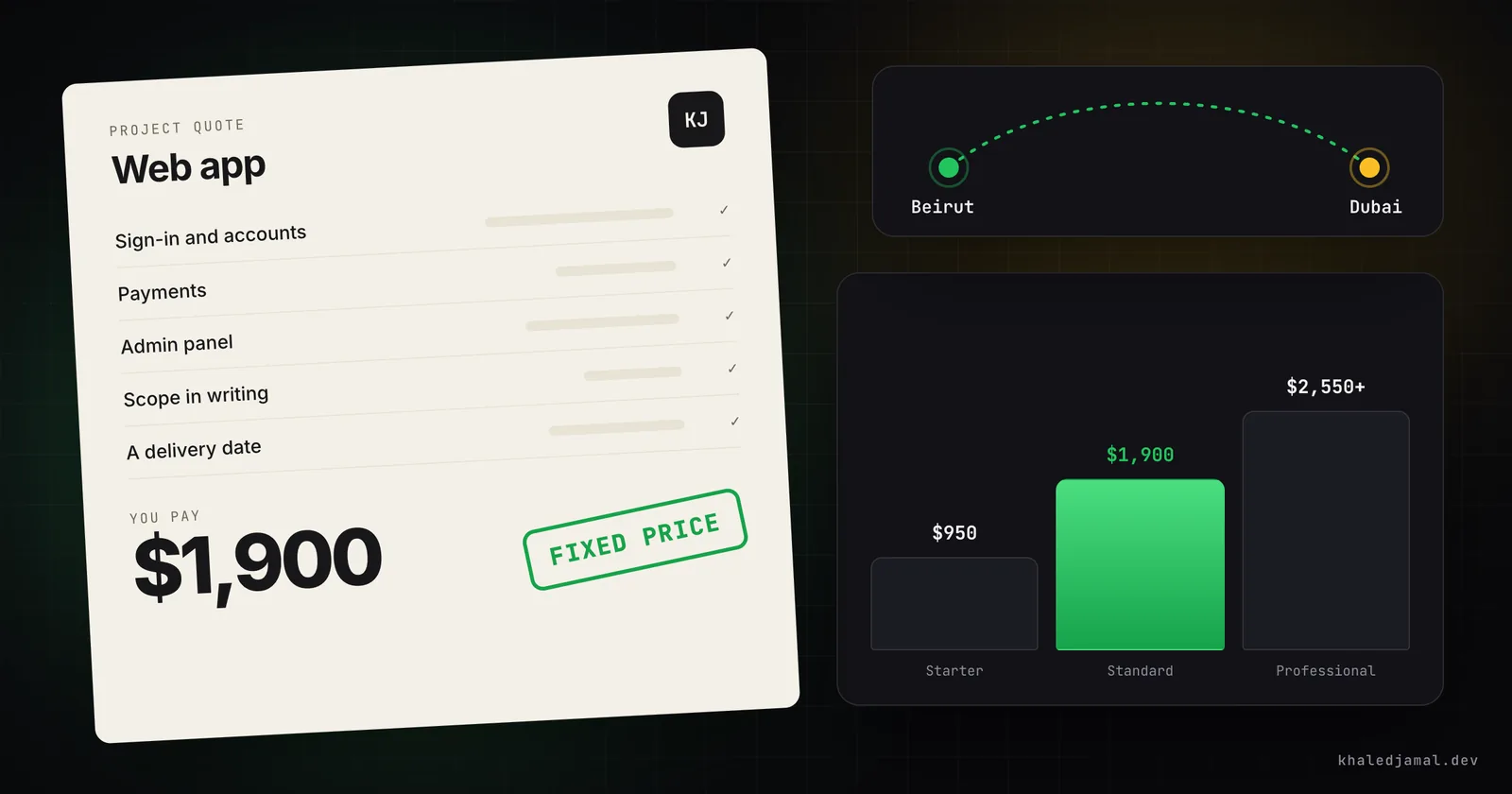
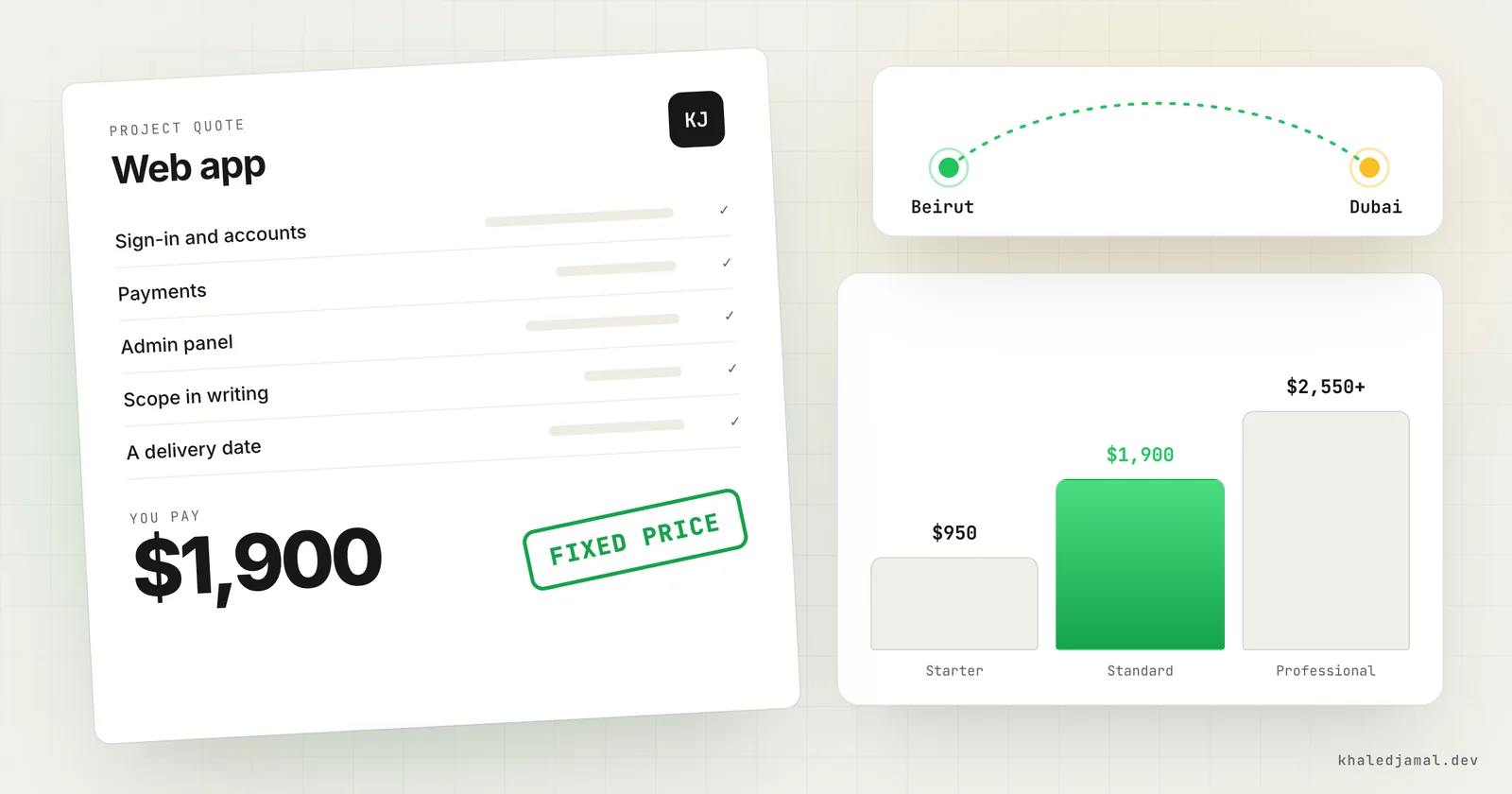
| Web or mobile app | $950 | $1,900 | $2,550+ |
A starter app is a single-page tool or internal dashboard. Standard adds sign-in, payments and an admin panel. Professional covers mobile or desktop apps, and a complex multi-tenant SaaS is scoped individually. The full list is here.
Estimator
What would your project cost?
Tick what you need. The result comes straight from my published prices.
What does it need?
Standard package
$1,900
From this price: auth, payments, admin panel.
Starter
$950
Standard
$1,900
Professional
$2,550+
Custom
Scoped
A starting point, not a quote. Send a brief and you get a fixed price and a date.
Get a fixed price →Other developers and agencies will quote differently, sometimes by a lot. What matters is understanding why.
What actually moves the price
Sign-in and accounts. The moment users have accounts, you need password resets, sessions, permissions and security reviews. This is usually the biggest single jump.
Payments. Taking money means handling failed cards, refunds, receipts and webhooks. In Lebanon, this also raises a practical question early: which payment providers can your business actually use?
Roles. "Admins and users" sounds simple. Every extra role multiplies the screens and the rules to test.
Integrations. Delivery apps, WhatsApp, accounting and booking systems all have their own quirks. Budget for each one separately.
Languages. A proper Arabic version isn't a translation file. Right-to-left layouts touch everything, so tell your developer at the start, because it's far cheaper early on.
Content you can edit yourself. If you want to change prices and photos without a developer, that has to be built, or you need a platform for it.
Does it cost less in Lebanon than in the UAE?
Rates generally follow local costs, which tends to make Lebanon cheaper than Dubai or Abu Dhabi for similar skill. I'd be careful about choosing on location alone, though.
If you're in the GCC and hiring someone in Lebanon, the things to check are practical:
- Time zones. Beirut and Dubai are only an hour or two apart, so working hours overlap well.
- Arabic and English. Having both from the same person removes a lot of back-and-forth, especially with Arabic content.
- Contract and payment. Agree the currency, the payment route and who owns the code in writing.
- Your own compliance. Some regulated businesses have rules about where data lives. Ask before you build, not after.
The cost nobody quotes
The build isn't the whole price. Ask about these before you compare two numbers:
- Hosting and running costs. Servers, email, storage and monitoring are monthly.
- Maintenance. Dependencies need updates and something will eventually break. Who fixes it, and at what price?
- Changes. Your first version will be wrong somewhere. Find out what a change costs after launch.
- Ownership. Do you get the code, the domain and the accounts? Some cheap builds keep these from you.
This is why I built Helm. A business can edit its own content, take bookings and see its customers for a monthly fee from $20, rather than paying a developer for every small edit.
How to compare two quotes
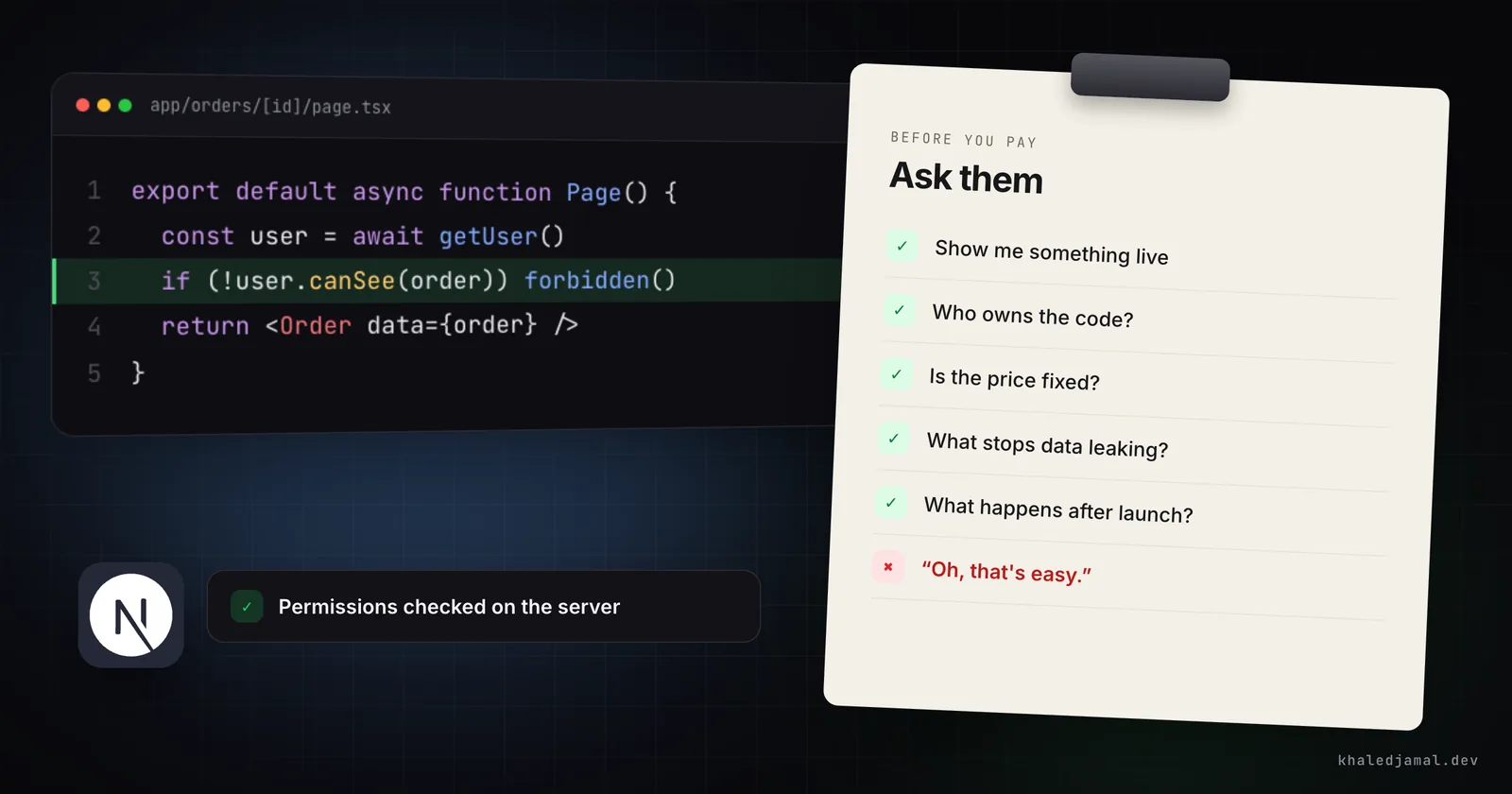
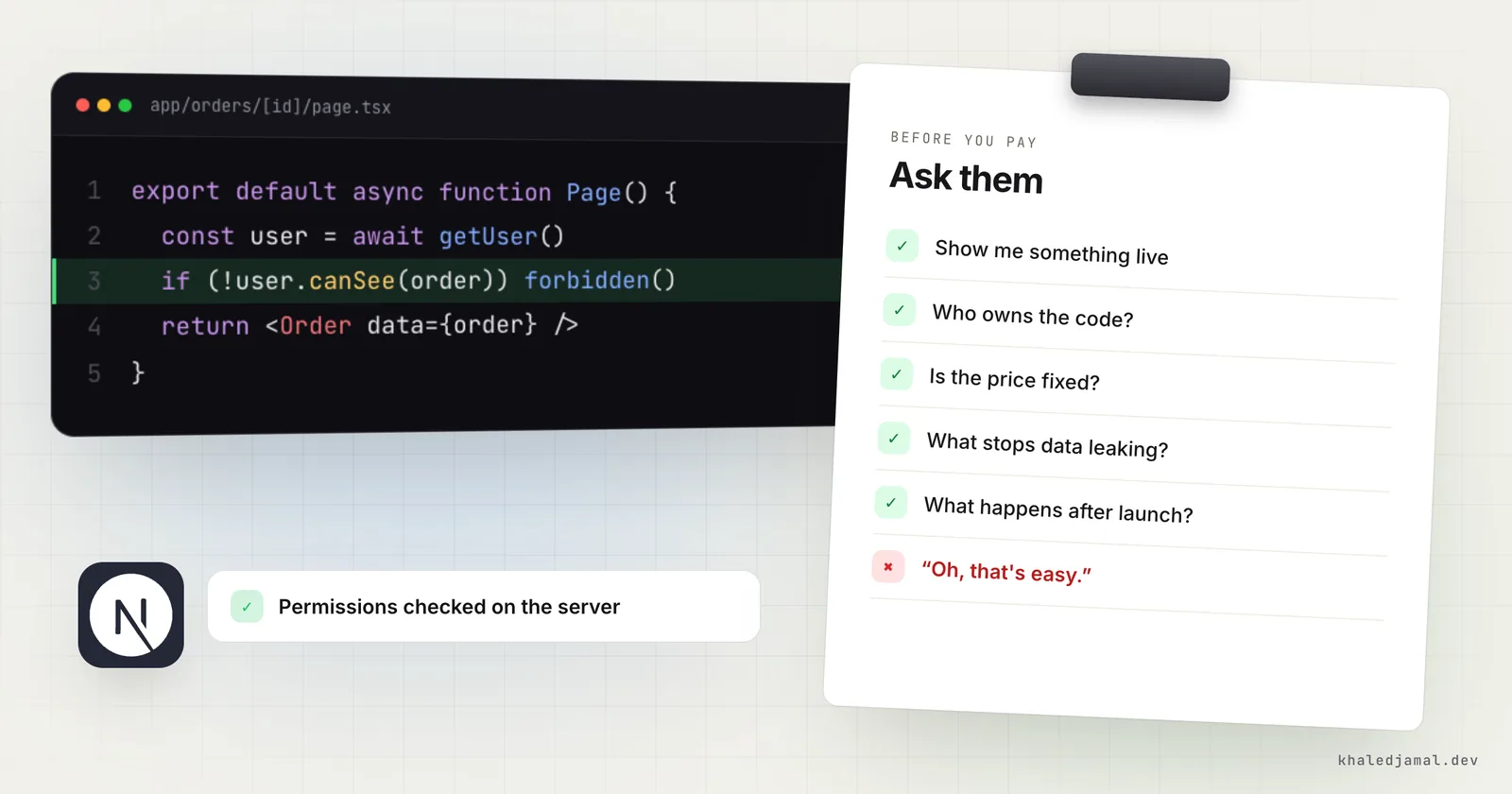
A cheap quote and an expensive one are often not for the same thing. Put these questions to both:
- What exactly is in scope, written down as a list?
- Is the price fixed, or is it an estimate that can grow?
- Who is actually doing the work?
- Can I see something you've built that's live right now?
- What happens after launch?
If one of them answers clearly and the other doesn't, that's worth more than the price difference. I wrote more about this in what to ask before you hire a Next.js developer.
A sensible way to start
Don't begin by pricing the whole vision. Work out the smallest version a real customer would pay for, build that and let what you learn decide the next step. It's the most reliable way I know to keep a budget under control.
If you have an idea and want a real number, send me a brief. I'll come back with a fixed price and a date.
Written by Khaled Jamal
Software engineer in Beirut, known online as Dequavious, and founder of Helm. I build SaaS platforms, AI agents, desktop apps and client sites end to end.